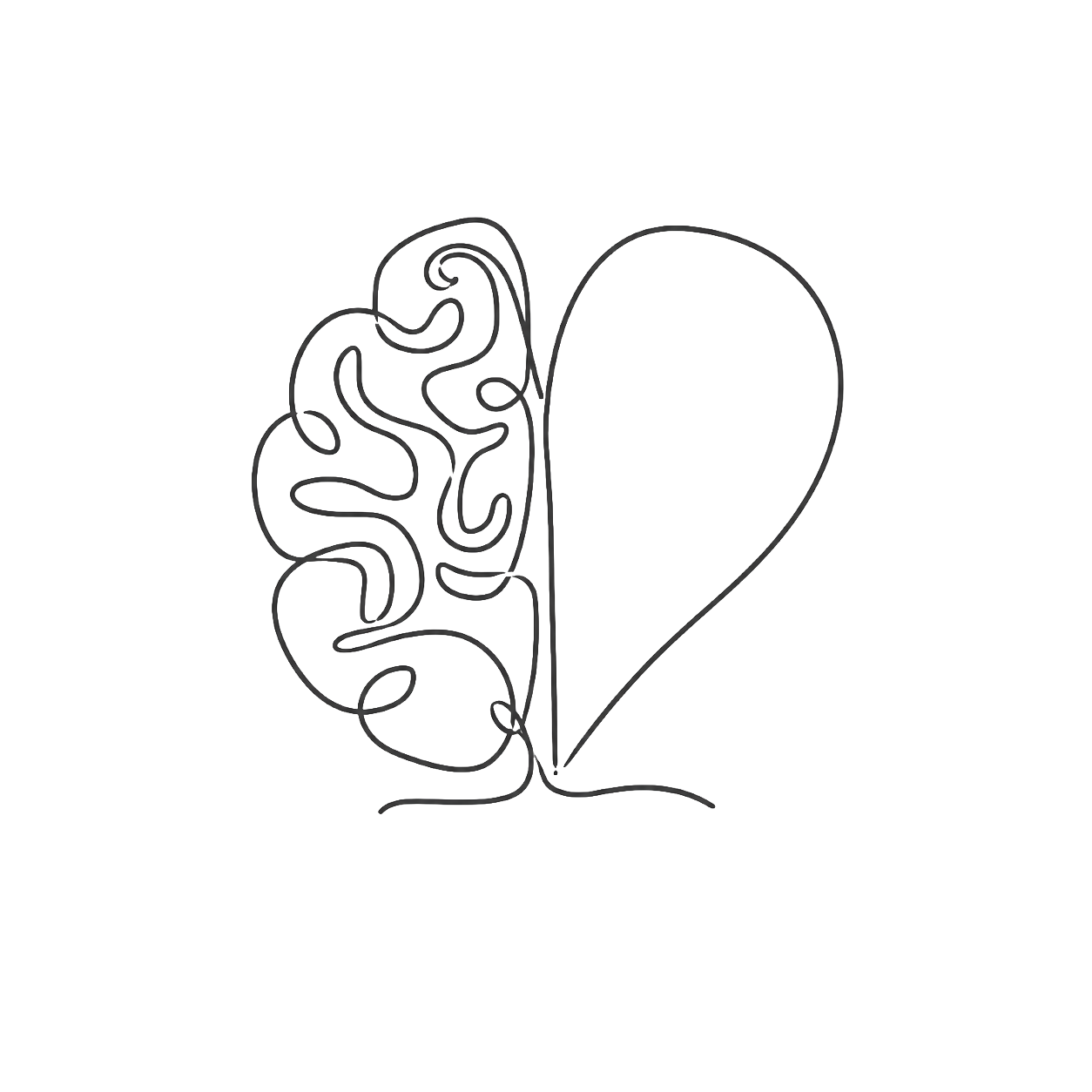
October is basically the season of the mixed bag. You reach into a trick-or-treat bag and might pull out chocolate, something sour, something you forgot existed, and at least one piece of candy nobody in the house actually wants. Honestly, emotions can feel a little like that too.
You can be excited about something and terrified of it. Relieved something ended and still deeply sad that it did. You can love someone and be angry with them, or feel proud of a decision while still wondering whether you made the right one. Yet when someone asks, “How are you feeling?” we tend to think we’re supposed to reach into the bag and pull out one clean answer: good, sad, anxious, fine.
Except sometimes the most accurate answer is simply, “It’s a mixed bag.”
That doesn’t necessarily mean you’re confused. It doesn’t mean you haven’t processed something enough, that you secretly made the wrong decision, or that one of your feelings must be more truthful than the others. Sometimes more than one thing is simply true.
Why Do We Feel Like We Have to Pick One?
We like clean explanations because they make things easier to understand. If leaving a relationship was the right decision, we expect to feel relieved. If we’re excited about a new opportunity, we assume we shouldn’t also be scared. If we love someone, being angry with them can feel contradictory. If something good happens, sadness showing up alongside it can make us wonder what’s wrong.
That’s when we start trying to figure out which emotion is the real one. If I miss them, does that mean I made a mistake? If this is what I wanted, why am I anxious? If I know this decision was right, why am I still sad? If I love this person, why am I so angry with them?
The problem is that emotions don’t always organize themselves into neat little categories for us. You can be sad something ended and relieved it’s over. You can be excited about what comes next and scared of what’s changing. You can love someone and still feel deeply hurt by them.
One emotion doesn’t automatically cancel out another, and the presence of mixed emotions doesn’t necessarily mean you need to figure out which one wins.
Opposite Feelings Aren’t Necessarily Contradictions
We use the word but a lot when we talk about emotions. We say, “I’m excited, but I’m nervous,” or “I know it was the right decision, but I’m sad.” Sometimes changing that one word can change the way we understand what we’re experiencing.
Try replacing but with and. I’m excited, and I’m nervous. I love them, and I’m angry. I believe it was the right decision, and I’m sad.
Using and makes room for both experiences without requiring one to disprove the other. This can be especially helpful during transitions because endings and beginnings tend to bring a lot of feelings with them. You’re often experiencing some combination of losing what was familiar while also moving toward something new.
Getting married can be exciting while bringing grief about the end of another stage of life. Starting a new job can feel validating and terrifying. Setting a boundary can bring relief and guilt. Ending an unhealthy relationship can feel freeing while still leaving you heartbroken. You can be certain about what you need to do and still wish circumstances were different.
The existence of an uncomfortable emotion doesn’t automatically mean something is wrong. Sometimes it simply means the situation matters.
We Call a Lot of Things “Stress”
There’s another problem that happens when several emotions show up at once: we stop trying to name them individually. Instead, everything becomes stress.
Someone asks how you’re doing, and the answer is, “Stressed.” Someone asks what’s going on, and you say, “I’m just overwhelmed.” Those words aren’t necessarily inaccurate, but they can become giant containers that hold a whole lot more than we realize.
What you’re calling stress might actually contain disappointment, fear, anger, guilt, excitement, grief, uncertainty, relief, or some combination of them. Those distinctions can matter because different emotions may be responding to completely different parts of the same situation.
Imagine you accepted a new job. You might feel excited because it’s an opportunity you’ve wanted, anxious because you don’t know what to expect, sad about leaving people you care about, relieved to leave parts of your old job behind, and worried about whether you’ll be good at the new one. If all of that gets shoved into the category of “I’m stressed about the new job,” you lose a lot of useful information.
Naming the individual pieces doesn’t magically make them disappear, but it can make what you’re experiencing easier to understand.
You Don’t Have to Fix the Feeling
Once we identify an uncomfortable feeling, we tend to move pretty quickly into trying to figure out what we’re supposed to do about it. How do I stop feeling anxious? How do I get over this? How do I make myself stop caring? How do I know which feeling I’m supposed to listen to?
Sometimes those are useful questions. Other times, we’re trying to solve something before we’ve really understood what it is.
The first step doesn’t always have to be figuring everything out. Sometimes it’s creating enough space to notice what’s actually there. I like thinking about this as gathering information rather than grading yourself. Instead of immediately deciding whether a feeling is reasonable, helpful, appropriate, or something you should be experiencing, you can start by simply noticing that it’s there.
It’s also important to remember that an emotion can give you information without becoming an instruction. Feeling guilty doesn’t automatically mean you did something wrong. Feeling anxious doesn’t automatically mean you shouldn’t do something. Feeling angry doesn’t automatically mean someone else is wrong, and feeling sad doesn’t automatically mean you need to undo whatever caused the sadness.
Naming a feeling does not mean you have to act on it. Sometimes the first task is simply understanding what’s there before deciding whether anything actually needs to be done about it.
When Everything Feels Tangled Together
Knowing that mixed emotions are normal is one thing. Actually figuring out what is happening when you’re in the middle of them is another.
It’s easy to say, “I know I’m feeling a lot right now.” It can be much harder to figure out what those feelings are connected to, why certain parts of a situation seem to carry more emotional weight than others, or what actually needs your attention.
This is especially true when your thoughts and emotions have started blending together. Maybe you keep replaying the same conversation. You know you’re upset, but you’re not entirely sure whether you’re angry, hurt, embarrassed, disappointed, or all four. Maybe you made a decision you feel good about but can’t understand why you’re still struggling emotionally afterward. Maybe you keep saying you’re overwhelmed because you genuinely don’t have a better word for what’s happening.
Sometimes the problem isn’t that you don’t have feelings. It’s that there are too many things in the bag to see any one of them clearly.
That’s where having a little structure can help.
This Is Why I Created The Mixed Bag™
The Mixed Bag™ Emotional Sorting Guide came from wanting a practical way to work with exactly that experience.
It’s designed for those moments when “I don’t know how I feel” really means “There is a lot happening in here, and I don’t know how to separate it.” Rather than telling you what you should be feeling or pushing you toward an immediate solution, the guide gives you a structured, visual way to slow things down and explore what is actually there.
The process helps you move from a general sense of stressed, overwhelmed, confused, or a lot toward a clearer picture of the different emotions that may be present, what they seem to be connected to, and what might actually deserve your attention. It also intentionally makes room for emotions that overlap or seem contradictory because sometimes those overlaps are where the useful information is.
This isn’t about perfectly analyzing every emotion you have, and it definitely isn’t about turning every feeling into a project. It’s simply a tool you can come back to when something feels tangled and you want a little more structure for sorting through it.
Explore The Mixed Bag™ Emotional Sorting Guide
Before You Decide What a Feeling Means
There’s one practice you can take with you without needing to fully unpack everything right now. The next time you catch yourself saying, “I don’t know how I feel,” try changing the question.
Instead of asking, “How do I feel about this?” ask yourself, “What feelings might be here?”
You don’t have to answer perfectly. You don’t even have to do anything with the answer yet. The purpose of the question is simply to move away from the assumption that there must be one correct emotion hiding somewhere underneath everything else.
Maybe there’s sadness and relief. Maybe there’s excitement with some fear mixed in. Maybe what you’ve been calling anger has some hurt sitting beside it. You don’t have to immediately decide what each feeling means or which one deserves the most attention.
Sometimes recognizing that there may be more than one is enough to begin.
And if you reach the point where you want to actually untangle those pieces and understand how they fit together, that’s the work The Mixed Bag™ was created to help you do.
Clarity Doesn’t Always Mean Having One Answer
We sometimes imagine emotional clarity as arriving at one clean conclusion: Ohhh. I’m actually angry. Sometimes that does happen, and it can be incredibly helpful. Other times, though, clarity sounds more like, “Okay. I’m sad about this part, relieved about that part, scared about what happens next, and still confident in the decision I made.”
That answer might look messier on paper, but it can actually be much clearer. You’re no longer forcing several different emotional experiences into one category or asking one feeling to explain the entire situation.
Understanding your emotions doesn’t require choosing which one is “right.” Sometimes the work is simply making enough room to hear what each one is telling you.
So, yes, your feelings might be a mixed bag.
That’s kind of the point.
Beyond the Session
The next time you find yourself saying, “I don’t even know how I feel,” try not to force yourself to come up with one answer. Start by considering that there may be several different emotions responding to several different parts of what you’re experiencing.
If you want help going beyond “it’s a lot” and actually sorting through what’s there, The Mixed Bag™ Emotional Sorting Guide gives you a structured, visual process you can use whenever your emotions feel particularly tangled.
Understanding what you’re feeling doesn’t mean you have to immediately fix it, act on it, or make a decision because of it. Sometimes understanding yourself a little more clearly is enough for today.
The Mixed Bag™ is an educational self-reflection resource and is not psychotherapy, medical care, diagnosis, or individualized mental health advice. Using the resource does not establish a therapist-client relationship. Reflection exercises can sometimes bring up strong emotions, and you are always allowed to pause, skip a prompt, or seek additional support.
Beyond Sessions is intended for educational and informational purposes only and is not therapy, a substitute for therapy, or individualized professional advice.